
The Best Way to Clean Your Car’s “Black Plastic” Trim
Black plastic trim is the part of the car that ages like milk.
One day it’s deep black and sharp.
The next day it looks like it’s been camping in the desert since 2011.
And the worst part? People try to “fix” it with greasy dressing that lasts about as long as your motivation to fold laundry.
So here’s the real answer: clean it properly first… then protect it with something that actually bonds.
The short version (Lithium approved)
To clean black plastic trim the right way:
-
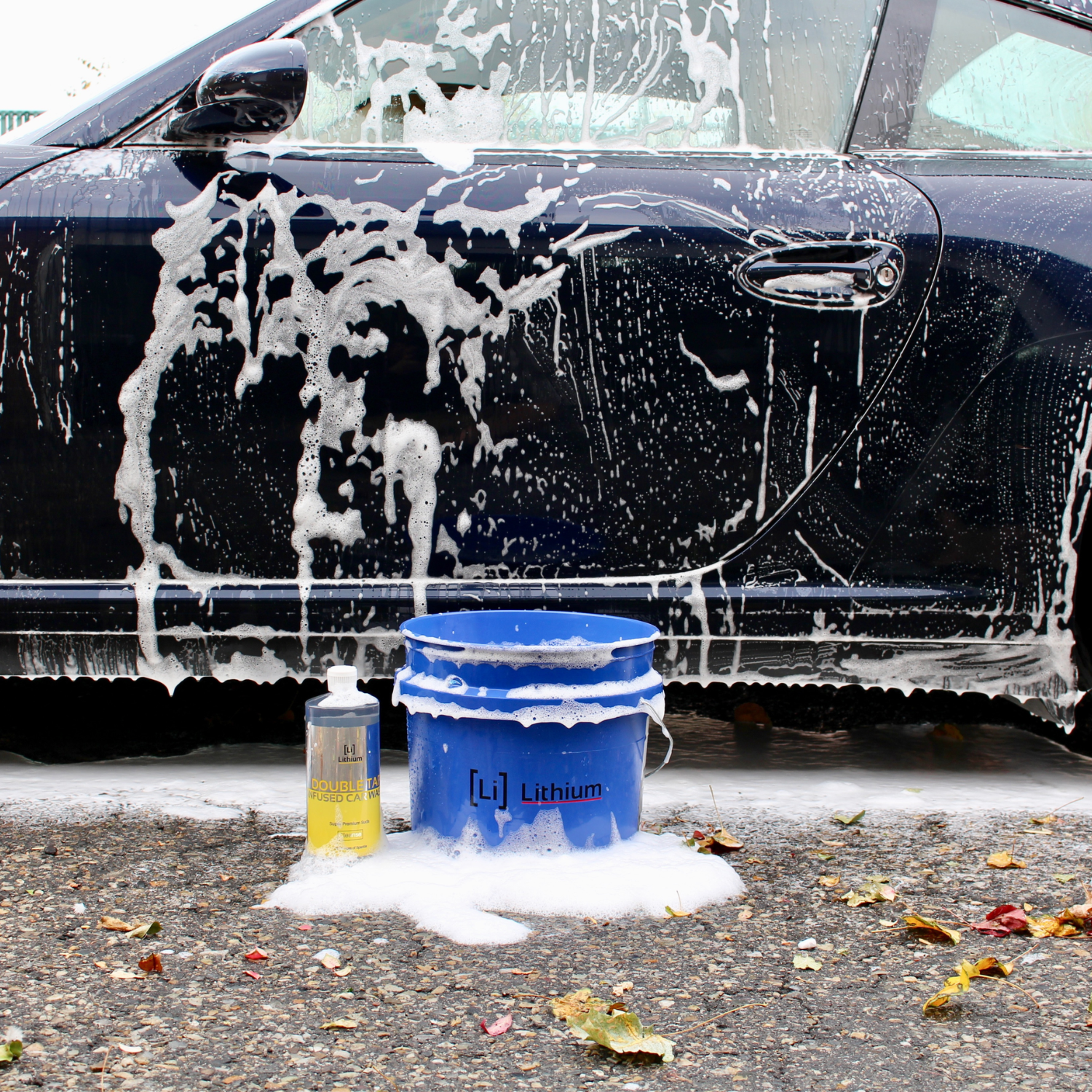
Wash the trim with car wash soap -Double Tap
-
Deep clean the texture with an APC (Hyper Cleanse) and a small brush/microfiber
-
Rinse and dry completely
-
If it’s faded: apply a true trim restorer thin, level it, and let it set -Trim Serum
-
Maintain with gentle washes (not harsh degreasers every week)
Avoid: tire shine / greasy “wet look” products on trim. They attract dust and fade fast.
What you’ll need (simple)
-
Car wash soap + water
-
APC (all-purpose cleaner)
-
A small detail brush or soft scrub pad
-
Microfiber towel
-
Optional: trim restorer (if it’s faded)
Step-by-step: how to clean black trim (without making it shiny and gross)
Step 1: Wash it like part of the car (because it is)
When you wash the car, don’t skip trim. Trim collects:
-
wax residue
-
road film
-
soap scum
-
tire sling and grime
Use your normal wash soap first. This removes surface dirt so you don’t grind it deeper.
Step 2: Deep clean the texture (this is the step that actually matters)
Spray APC on the trim and lightly agitate with:
-
a soft brush for textured trim
-
a microfiber for smoother trim pieces
You’re trying to pull out the embedded grime that makes trim look blotchy.
Step 3: Rinse and dry completely
Trim restorers and protectants hate water trapped in texture.
If you apply anything while it’s damp, you’ll get:
-
streaks
-
uneven color
-
“why does it look worse?” moments
Dry it well. If you want to be extra, let it sit in the sun a few minutes.
If your trim is faded (cleaning won’t fix this)
If your trim looks gray/ashy even when it’s clean, that’s oxidation. Cleaning won’t bring pigment back.
That’s where a real trim restorer comes in.
How to restore faded trim (without streaks)
-
Make sure trim is clean and bone dry
-
Apply trim restorer thin on an applicator
-
Work it into the texture evenly
-
Level it with a clean microfiber (this prevents high-gloss patches)
-
Let it cure/set before getting it wet
Thin coats win. Thick coats smear and look uneven.
Common mistakes (that make trim look worse)
-
Using tire shine on trim (greasy, dust magnet, short-lived)
-
Applying restorer over old dressing (it won’t bond)
-
Applying too much product (streak city)
-
Not drying trim before applying anything
How to make trim stay black longer
-
Wash regularly with real car soap
-
Avoid heavy degreasers on every wash
-
Don’t constantly “dress” trim with shiny products
-
If you’re in harsh sun: protect it the same way you protect paint—consistency
FAQ
Can I use tire shine on plastic trim?
You can, but it’s usually greasy and temporary. It’s made for rubber tires, not textured plastic.
Why does my trim look patchy after I apply product?
Usually: leftover oils, damp trim, or you applied too thick. Clean it, dry it, reapply thin, and level.
Does the heat gun trick work?
It can darken trim temporarily by pulling oils to the surface, but it doesn’t add protection. It’s easy to overdo and damage trim if you’re careless. Use at your own risk.
How long will trim restoration last?
Depends on prep, sun exposure, and washing habits. Proper prep + real restorer lasts much longer than dressings.
Recommended basics (easy-mode)
-
Trim Serum — restore and darken faded trim without the greasy “wet look” problem
-
Double Tap — quick protection after washing to help the whole car stay cleaner longer
- Hyper Cleanse — deep cleaner for the “why is this trim still blotchy?” situations (great for stripping old grime/dressings before you restore)